How One Square Foot Holds the Key to Simplified Vegetable Gardening

When I envision a vegetable garden, what immediately comes to mind?
If your childhood memories mirror mine, the traditional vegetable patch was a sprawling area, perhaps 35′ x 35′, laid out with endless 35-foot, single-file rows of plants. And accompanying this massive space was the constant chore of weeding. If we ever dared to express boredom during the summer months, my mother's instant solution was usually to send us straight back to the garden to pull weeds.
It’s truly a testament to my passion that I still enjoy gardening today. Despite those early experiences, my love for cultivating plants has endured.
My father rigidly stuck to the same planting methods year after year: long, singular rows. Deviation from this traditional approach simply wasn't an option in his mind.
There came a period of several years where his work commitments kept him away from the garden. During my high school and college years, I seized the opportunity to experiment freely.
I introduced unconventional elements like an herb garden and a perennial flower border directly into the main vegetable plot. *GASP* Yes, I suppose you could call me a mildly rebellious teen.
Crucially, I also started trying out a technique I had read about: square foot gardening. This method completely revolutionized my approach, becoming the foundation of how I garden even now, more than 25 years later.
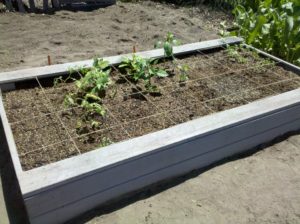
It helps to actually mark the square foot sections in your square foot garden, at least the first few times you plant this way. In this garden we used nails along the edge and garden twine to make our grid. There are grids available specifically for square foot gardening, but most people have something already on hand that does the job nicely such as bamboo, wooden slats, or old miniblinds. You just need to be able mark the grid clearly in the garden.
The core principle of square foot gardening is simple: divide your entire planting area into a grid of 1′ x 1′ squares. Each square functions as a separate planting unit. The density of plants within each square varies depending on the specific crop. Instead of planting in lines, crops are strategically spaced to maximize coverage within their designated square.
If you have always wanted to start a vegetable garden but feel overwhelmed, I previously published a post covering some initial questions to consider. Whether you plan to use an in-ground plot or a raised bed, I wholeheartedly endorse the square foot gardening method. A 4′ x 4′ raised bed or plot is an excellent size for beginners. It’s compact enough for easy management but still large enough to provide a substantial and satisfying harvest for a family.
The Advantages of Square Foot Gardening
1. Significantly Less Weeding
This is undeniably the single biggest reason why I adore this method. Aside from a few stray weeds early in the season, I rarely, if ever, need to weed my vegetable garden. Because the plants grow closely together, the entire soil surface is quickly shaded out, suppressing the growth of most weeds.
2. Optimal Space Utilization
With square foot gardening, you can achieve a remarkable variety of crops in a minimum amount of space. Theoretically, you could plant a different crop in every one-foot square. For instance, a 4′ by 8′ space provides 32 individual square foot sections. That allows for tremendous diversity in a small area. Many gardeners start with a 4′ x 4′ garden (16 squares). The maximum width is generally kept to 4 feet because this distance allows you to comfortably reach the center from any side, eliminating the need to walk on the soil or step over closely planted crops.
3. Adaptable to Any Setting
While the classic guide focuses on raised beds, the concepts of dense, gridded planting can be easily applied to in-ground beds or various containers. Just measure out your desired planting area on the ground or calculate the surface area of your container. (Area of a circle = π(radius)² and one square foot = 144 square inches).
Personal Adaptations (and Defying the Purists)
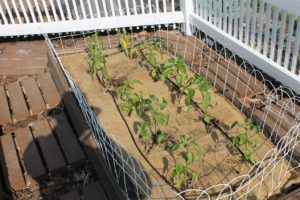
Peppers in our raised bed planted according to Square Foot Gardening techniques (1 plant per square foot). That year we used an old burlap sack for weed suppression. Also note the black tubing for our drip irrigation system.
If you spend time on gardening forums or discussion groups dedicated to Square Foot Gardening, you will quickly encounter highly devoted members. Some of them can be quite stringent about adhering to the method's official book. I've witnessed people being criticized for not being "true" Square Foot Gardeners. However, I will openly encourage you to commit the "blasphemy" and adapt the core principles to best suit your unique gardening setup!
Dispelling the Myth of Mel’s Mix
Furthermore, I suggest skipping the famous Mel’s Mix (the proprietary blend of equal parts peat, compost, and vermiculite) often promoted online. We prepared Mel’s Mix a few years ago for an educational garden demonstration. Purchasing the necessary volumes to fill our 4′ by 8′ bed quickly became prohibitively expensive—mostly due to the high cost of bulk vermiculite. The process of preparing the mix was also labor-intensive; we had to blend everything on a large blue tarp before shoveling it into the beds.
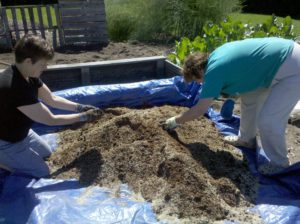
Mixing up “Mel’s Mix” for our 4′ x 8′ Square Foot Garden was a lot more work than we anticipated.
At my own house, my raised beds are filled with soil that we had already been improving for years, mixed with various bagged planting mixes designed for vegetables, and supplemented with my own worm compost. While Mel’s Mix produced gorgeous, weed-free beds, it was too well-draining and required excessive watering, especially during the peak summer heat.
My raised beds at home drain adequately but retain moisture better, resulting in much healthier plants and less work for the gardener. Save yourself the expense and effort: opt for quality bagged garden or raised bed mix instead. Just be sure to keep that secret from the online Square Foot Gardening community, lest they "shun" you!
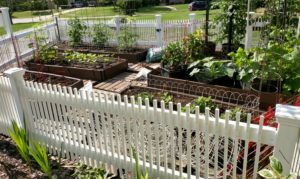
Our garden (2018): a mix of raised beds planted with Square Foot Gardening Techniques and containers.
My Favorite Square Foot Gardening Resources
Resources in green are affiliate links for your shopping convenience.
- Square Foot Gardening book— The third edition was released in 2018 and serves as a comprehensive reference guide for planting almost any crop using this method. This book is widely available and often found in used bookstores.
- Square Foot Gardening Foundation— This organization shares newsletters and information on global efforts to combat hunger using the Square Foot Gardening system. They also provide useful soil calculator tools and online references for planting densities.
- Square Foot Garden tool— This online tool eliminates the need for manual measuring, simplifying the process of spacing your plants accurately within the grid.
- Raised bed kits— Raised beds represent an investment, but they offer major benefits: no tilling required, quicker soil warming in the spring, and better drainage in wet conditions. If commercial kits aren't for you, purchasing quality corner brackets is highly recommended, as they provide superior structural integrity compared to simply nailing the boards together.
- Drip Irrigation— Installing a drip irrigation system dramatically reduces maintenance time. It connects easily to a garden hose, and adding a timer ensures consistent watering without needing to remember to turn the water on or off.
Conclusion and Next Steps
If this approach resonates with you, I invite you to subscribe to Grounded and Growing today. You will receive a complimentary copy of “15 Tips to Become a '15 Minute Gardener'” which is designed to help you minimize the time spent working ON your garden and maximize the time spent enjoying being IN your garden. By joining the Grounded and Growing community, you can finally move gardening off your “To-Do” list and allow yourself time to enjoy your garden and savor the peace and serenity there. I provide timely updates on new posts and weekly check-ins about the ups and downs (the good, bad, AND ugly) of my own garden.
Post a Comment for " How One Square Foot Holds the Key to Simplified Vegetable Gardening"