Tomatoes as a duo: Growing two varieties on one plant through approach grafting

Grafting is a horticultural technique that combines two plants to achieve agronomic benefits. With tomatoes, this method is particularly useful for grafting a delicate but flavorful variety onto the roots of a robust but tasteless one. But
grafting also allows you to grow two different varieties on a single plant ! This way, you can benefit from a variety of fruits while optimizing space in your garden. Among the various grafting techniques, approach grafting stands out for its simplicity and efficiency.
What is approximate inward processing?
Definition of approximate processing
Approach grafting involves joining two still-rooted plants so that they gradually grow together. Unlike other grafting methods, this technique does not require immediate pruning of the plants, thus reducing the risk of failure and eliminating the isolation phase (the main cause of failure).
Specific advantages of this method
- Improved healing between plants: Proximity grafting allows the two plants to gradually adapt to each other, which promotes tissue healing.
- Stronger growth: This method provides a continuous supply of nutrients to both plants, which can help support a weaker variety on a stronger one.
ATTENTION: Growing two varieties on one plant will not give you a double harvest. (At best, the weaker variety will produce slightly more, but usually you will simply get two "half harvests").
- No isolation phase required: Unlike other grafting methods that require a "humidity chamber", the plants remain outdoors during approach grafting, making the method less complicated.
Why grow two tomato varieties on one plant?

Variety of tastes and colors
Growing two tomato varieties on one plant allows you to harvest fruits with different flavors, sizes, and colors. This ensures a diverse harvest, even in a small space.
Space saving in the garden
Proximity grafting allows you to make the most of the space in your garden. Instead of planting several tomato plants, you can concentrate on a single plant that bears two varieties, thus freeing up space for other crops.
Prevention of blossom end rot
Blossom end rot (also known as black spot) is a common problem. Some tomato varieties are more susceptible than others. By grafting a less susceptible variety onto a resistant rootstock (like most cherry tomatoes), you can reduce the risk of this disease and improve the quality of your harvest.
Steps for successful approximate grafting of tomatoes
Required materials
- Scalpel : A precise tool for clean cuts on both plants.
- Grafting clip or grafting tape (or a flat rubber band): To hold the two plants together until fusion .
Preparing the plants
- Selection of varieties to be grafted: Choose two tomato varieties. Ideally, a weaker variety is grafted onto a stronger one (however, all combinations are possible).
- Preparation of rootstock and scion: Ensure that the plants are healthy and sufficiently developed to support the graft (ideally between 5 and 10 cm, but larger plants can also be grafted).
Implementation of the refining process
- Make cuts on both plants: Cut both plants cleanly at similar heights to facilitate easy grafting.
IMPORTANT: The cut on the rootstock should be made from top to bottom, while the scion is cut from bottom to top. This improves the mechanical stability of the graft.
- Bring the plants closer together and fix them : Bring the cuts into contact and fix them with a grafting clamp or grafting tape.
- Monitoring and care: Ensure that the plants remain in contact and check for the appearance of any signs of fusion.
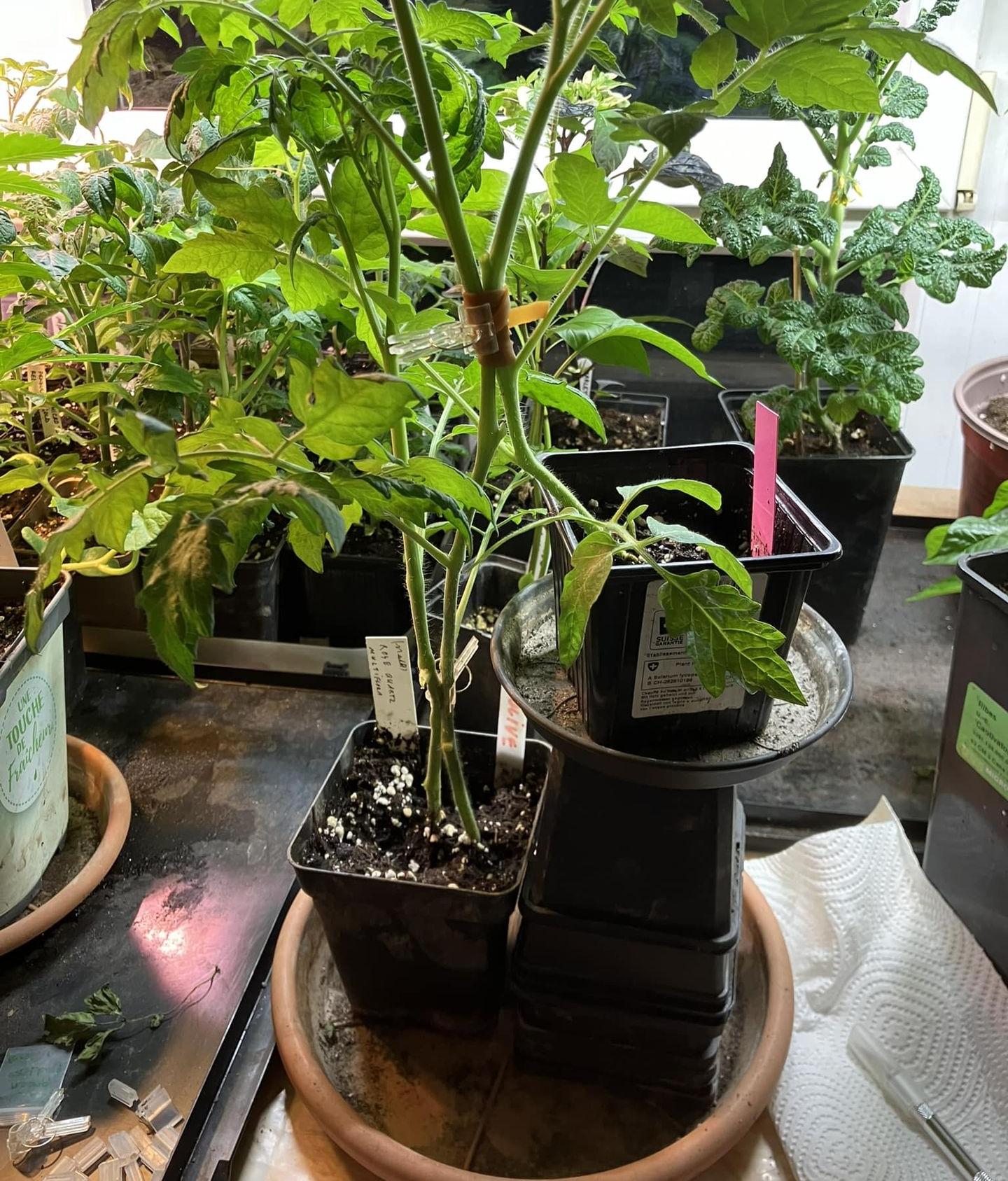
It is possible to grab the plants with different tails
Post-grafting care for optimal growth
Avoid direct sunlight
Avoid exposing the plants to direct sunlight for the first 15 days.
Remove staples or tape after fusion
Once the plants have grafted together (usually after 3 to 5 weeks), trim the roots of the weaker plant. Carefully remove the grafting clips or tape to avoid disturbing growth.
Note: The graft union may remain sensitive for some time.

Après 15 to 20 days, this is the moment of "libération" of the plants
Pruning and Managing Secondary Shoots
Pruning and care of side shoots
Remove any unwanted shoots that appear on the rootstock or scion to concentrate energy on the main shoots.
Common problems and solutions in near-surface processing
The plant fusion fails.
If grafting does not occur, check the alignment of the cuts and ensure the plants are held securely together. Insufficient pressure can cause the graft to fail.
Diseases after grafting
After grafting, the plants are more susceptible to infections. Ensure that the plants are not exposed to excessive humidity.

The graft point can be an entry point for diseases.
Differences in growth
If one variety grows faster than another, this can disrupt the balance of the grafted plant. Prune regularly to ensure even growth and balanced production.
Conclusion
Approach grafting is an effective and relatively simple method for growing two tomato varieties on one plant. It offers numerous advantages, such as a diverse harvest, optimized planting space, and reduced disease risk. This enjoyable technique is suitable for all gardeners, even beginners, and opens up new possibilities in the vegetable garden. Try it out to enrich your harvest and expand your grafting experience!
Post a Comment for "Tomatoes as a duo: Growing two varieties on one plant through approach grafting"